IKKIO: Building the Future of Accessible AI Assistants for Smart Glasses
How IKKIO is integrating with leading smart-glasses SDKs to design accessibility-first AI, starting with Meta Ray-Ban.
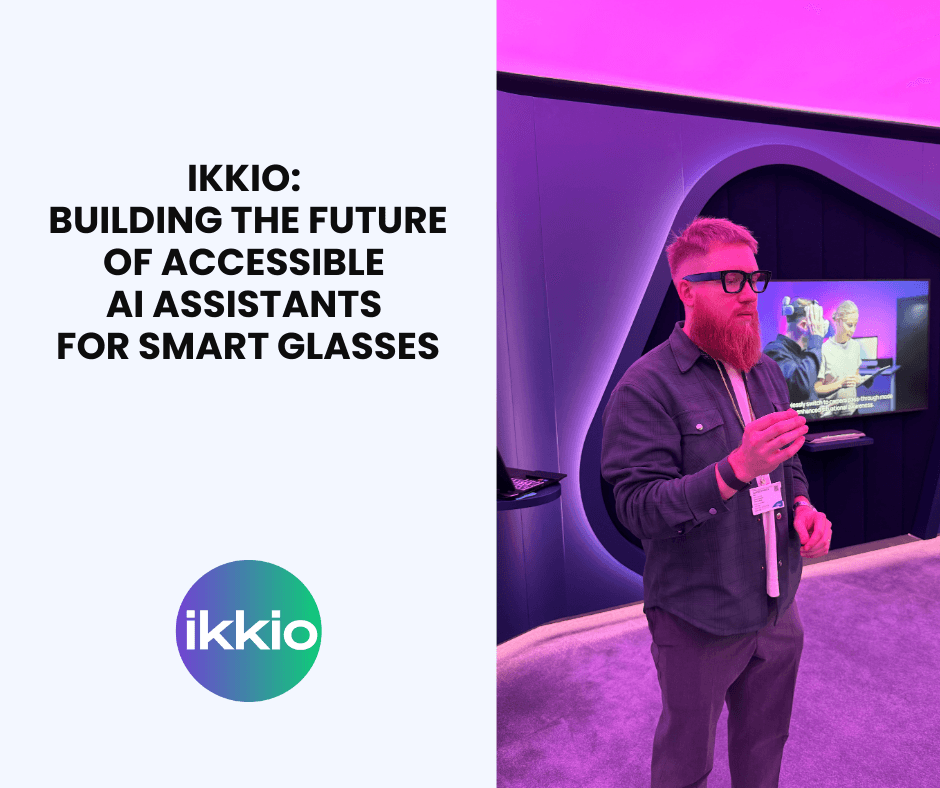
Smart glasses are transitioning from experimental devices into mainstream wearables. IKKIO is developing an AI assistant specifically designed with blind and visually impaired users in mind — though it serves anyone who benefits from voice-first, contextual computing.
Why Meta Ray-Ban is prioritised
Focus matters. While building hardware-agnostic solutions, IKKIO prioritises Meta Ray-Ban due to its widespread market adoption. This enables faster user outreach, real behavioural feedback, real-world testing in everyday settings, and iteration based on genuine accessibility requirements.
Early internal and exploratory testing is underway, with a public waitlist launching soon.
Accessibility and mainstream hardware
Accessibility innovation often struggles when hardware is rare, expensive, or difficult to obtain. Meta Ray-Ban changes this equation — it’s commercially available, fashion-forward, socially normalised, and retail-accessible.
Most smart glasses weren’t designed with accessibility-first principles. That gap is exactly where software-layer solutions like IKKIO can make an outsized difference.
The industry SDK trend
Beyond Meta, companies like Google and Brilliant Labs are opening developer pathways earlier in product lifecycles. This “SDK-first” strategy accelerates innovation, expands use cases beyond manufacturer roadmaps, and enables specialised solutions like accessibility AI.
Multi-device strategy
IKKIO operates as a hardware-agnostic layer across:
- Brilliant Labs Frame
- Meta Ray-Ban
- Emerging devices like Mantra Glasses
- Future Android XR platforms
Technical architecture
The AI assistant combines three components:
Edge AI: Delivers fast response times and lower latency with privacy-preserving processing.
Cloud AI + LLM reasoning: Provides deeper contextual understanding and complex scene interpretation.
Vision + multimodal processing: Handles image capture, computer vision analysis, and environmental understanding.
What’s next
The next milestone involves launching a public early-access waitlist for blind and low-vision users — particularly those with Meta Ray-Ban devices. Mobile-only mode (iOS required) will be available during this phase alongside smart-glasses testing.
Their true potential will only be realised when they are inclusive by design. IKKIO invites the community to participate in creating accessibility-first wearable AI that functions across multiple platforms.